|
Skip to...
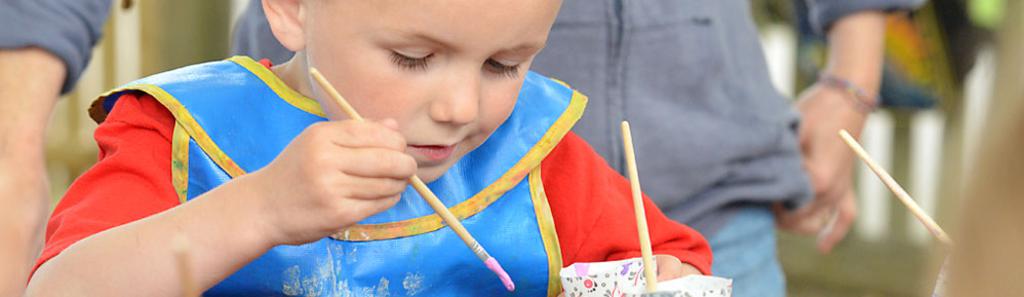
OUR SCHOOL The Erdman Preschool has grown from a school for eight children, started by Margaret Erdman in her Scituate home in 1971, to a school serving over 100 families from several South Shore communities. The school moved to its current location in 1973 and has expanded to include morning and afternoon classes for three, four and five year olds. The school is a non-profit organization run by the Board of Directors and does not discriminate in providing services to children or their families on the basis of religion, national origin, cultural heritage, race, gender, political beliefs, sexual orientation, marital status or disability in its admissions or hiring practices. OUR PHILOSOPHY The Erdman Preschool's purpose is to provide an enriching and creative educational experience for young children. The school is open to all three, four and five year old children in Scituate and neighboring communities. We welcome children of varied abilities, needs and backgrounds because we believe children learn so much from each other. Our program is structured enough to offer security, yet open enough to foster creativity and independence. The daily routine includes active outdoor play to develop large muscles; a meeting time with stories, discussions and singing; a snack time for socializing and trying new foods; small group lessons full of discovery and exploration through art, science, nature and math to develop thinking skills; and, most importantly, a choice time when children decide where they wish to work and play. Choices open to the children include a woodworking bench with real tools, a dramatic play area with enticing dress-ups and props, easels, puzzles, manipulative materials, blocks, games, nature study, library, water or sand table, clay and an art center. We believe that children feel best about themselves when they develop new skills and learn to do as much for themselves as possible. The teachers are always alert to promote self-help skills and self-sufficiency. The children are taught to use materials and tools in a respectful and responsible manner so that they can choose them independently. Children are natural artists. They exhibit the same qualities of inventiveness, creativity, originality and discovery that belong to all adult artists whether they are designers, architects, painters, sculptors, etc. What better place to nurture this natural talent could there be than in the preschool classroom? Here the children's own creativity and playfulness is the focus of our art program. The art produced by the children reflects their own interests, ideas, discoveries and inventions. The same energy used in make-believe, dramatic play, block-building, dressing-up, helping to cook at home, playing in the bathtub etc... is what inspires the creations at the woodworking bench, the easel, the clay table and the art center. No adult-controlled "art" project can ever build an appreciation for the uniqueness of each child. Teacher-made patterns and mass produced copy-cat projects undermine a child's sense of worth, encourage dependency, and soon lead children to believe that they are not good in art. At the Erdman Preschool children develop healthful personalities, self-direction and inner controls. They gain satisfaction from expressing their own ideas, completing tasks and learning to care for and about others. CURRICULUM Schools receiving funds under the MA Department of Education's Community Partnerships for Children (CPC) are required to document their use of Guidelines for Preschool Learning Experiences in planning curriculum. The Guidelines were approved by the state in 2003 and are based on the standards for PreK and K curriculum in the MA Curriculum Frameworks. The Guidelines focus on what teachers should be doing to help children develop skills and knowledge for future academic success. They are not a list of what children should know at 3 or 4 years of age. The Guidelines form a basis for planning and evaluating curriculum to ensure that experiences are developmentally appropriate and that they build a balanced foundation for future learning in all content areas. They are not meant to be implemented through direct instruction but rather through play experiences throughout the preschool day. Erdman Preschool has been part of CPC since 1998. Our participation allows us to access tuition assistance for eligible families and to provide no cost and/or low cost educational training and workshop opportunities for our teachers and parents. Teachers document use of the Guidelines in their plan books and on the class message board each day so that parents can understand how they are used in our curriculum. Many of the principles present in the Guidelines have been at the heart of Erdman's curriculum since the school was founded. We know that all children are capable of learning and that they learn best by doing, so they must be provided with many opportunities to explore, move and interact with others. No two children will develop skills in exactly the same way or at the same time so teachers must always be ready to individualize expectations, materials and experiences. Development in one area will influence development in other areas. Every part of the day provides chances to learn in a variety of curriculum areas. (Block play, for example, will contribute to social skills, math skills, language skills to name a few.) We know that close communication and relationships with families will support learning and development for all children. The Guidelines for Preschool Learning Experiences focus on the following six content areas: English Language Arts, Mathematics, Science and Technology/Engineering, History and Social Studies, Health Education and the Arts. All of these areas are covered in depth in our curriculum. A copy of the Guidelines along with examples of the experiences we provide in each guideline area will be posted on the parent board in the upstairs hall. Classroom message boards with daily activities will also note several guidelines covered that day. Our monthly Newsletter will also refer to guidelines in the class activities section. We welcome your questions and comments so that we can help you appreciate how the "new" Guidelines have always been part of our preschool experiences. CLASSES Erdman Preschool offers 2, 3 and 4-day classes for Threes, Older Threes, Fours and Fives. Our Fours classes are pre-kindergarten classes designed to help children develop the skills necessary to enter Kindergarten in the following year. The 4-Day Older Fours class is available for those children who may benefit from an additional year of growth and development before entering Kindergarten. Children who have completed a Fours Class will have placement preference in this class until May 1. Morning classes meet from 9:00 to 11:30. Afternoon classes meet from 1:00 to 3:30. Each class has at least two teachers who have standard professional credentials, some advanced degrees and qualities of warmth, flexibility and sensitive regard for the uniqueness of each child. All teachers are licensed by the MA Department of Early Education and Care and participate in ongoing professional training. Parents and children are invited to visit the school prior to registration. Conferences are held with parents of all children the week before school begins. This enables teachers to learn some of the unique and special characteristics of each child so that they can individualize his or her school experience. CONFERENCES Frequent, open communication between family and school is in the best interest of the child and occurs on an informal basis each day at drop off and pick up times. Sometimes it is not appropriate to discuss concerns with your child present so teachers and Director are always available for conferences. Please call the office or speak with your teachers to set up a mutually convenient appointment time. In addition to beginning of the year parent conferences and informal meetings as necessary, formal parent-teacher conferences are held in December for the Threes and in January for the Fours. All parents receive an end of the year summary report of their child's progress. Conferences are not held at this time but may be scheduled if necessary. Assessment of children's progress is an on-going process and includes classroom observation, note taking, work sampling, screenings and skills checklists. We use The Work Sampling System (Dichtelmiller, Jablon, Dorfman, Marsden and Meisels, 1997) published by Pearson Education Inc. to assess and document skills, knowledge, behavior and accomplishments across a wide variety of curriculum areas. We share the results of this assessment with parents during our parent-teacher conference times and at the end of the year. Input from parents about their child's progress is equally important. All parents should feel free to speak with teachers and/or the Director any time questions or concerns are present. Please see "Parent Participation" for additional communication goals. ENROLLMENT PROCEDURES Registration for the following September takes place in January for current students, siblings and past Erdman families. On February 1st registration is open to new families. When classes are filled applicants are placed on a wait list. A lottery system may be used if more than one application has the same date. A $50. non-refundable deposit is required at the time of registration when the child is placed in a class agreed upon by the parents. Please call the Office to receive an application and schedule a visit to the school. We are always available to discuss your questions and concerns about enrollment and class placement. TUITION Tuition rates for the following year will be available during January registration. Tuition is payable by check only in ten installments as follows: Limited scholarship aid is available. Contact the Director as soon as possible. All applications are confidential and should be received by June 1. Tuition is not refunded due to illness or vacation plans. If your child will miss school for any reason please call the Office to let us know. It is often difficult for a child to come into class late when everyone is busy or to leave early when activities are still in progress. We know that this is sometimes inevitable so it is also important to let us know if your child will be late to school or must leave early. This allows teachers to plan the day to include everyone. HEALTH POLICY A copy of the school's complete Health Policy is attached to this Handbook. Please remember that to insure the health of all children and to comply with state law, a standard medical form must be completed by your child's doctor and returned to school by the first day. Failure to do so may delay your child's entrance. The Director is always available to discuss your concerns or questions about the Health Care Policy. If you are interested in learning about free or low cost health care for your child you may call the MA Customer Service Center at 1-800-841-2900. It is imperative that you inform the school if your child suffers from allergies or medical conditions of any type. Our school strives to be "nut free" as several children each year have potentially life-threatening allergies to peanuts, tree-nuts and several types of seeds and oils. We will not knowingly allow these foods to be brought to school for any reason. Labels are read carefully to insure that no food containing these ingredients is served at school for snack, during cooking activities or brought to Lunch Bunch. If an ingredient label states that the food has been, or may have been, processed in a plant or on equipment that also processes peanuts, or nuts of any kind, that food must not be brought to school. If your child has an EpiPen for any reason, please bring it to the Office for safe storage. EpiPens may never stay in a child's school bag. Allergies of all types must be noted on the medical form so that we can work to prevent the child from coming in contact with these allergies causing materials. If your child must bring any kind of medication to school due to before or after school activities an adult must bring the medication to the Office upon arrival at school and an adult must pick it up when the child leaves school. This is the responsibility of the adult providing child care. It is not the teacher or Director's responsibility. MEDICATION MAY NEVER STAY IN A CHILD'S SCHOOL BAG DURING THE SCHOOL DAY. If we must evacuate the building for any reason we will be sheltered at either the Gates Intermediate School or the Scituate Public Library. Emergency information and cell phones will be brought with us. Parents will be called to pick up their child as soon as possible. BEHAVIOR MANAGEMENT PLAN All discipline and guidance shall be based on an understanding of the individual needs and development of each child. We are maximizing the growth and development of the children while protecting the group and the individuals within it. If a child behaves outside of the set limits, the teacher will quietly take the child aside and explain why the behavior is inappropriate and give suggestions to resolve it. A child may be removed from a particular activity for a period of time and redirected to more appropriate choices. As the child regains self-control, access to additional activities will be made available to him/her. We are consistent, fair, firm and understanding in order to help children develop self-control and problem solving abilities. Teachers focus on positive social behaviors and state limits, requests, suggestions and acknowledgements in a respectful and kind manner. Corporal punishment, including spanking, will never be used at Erdman. No child will be left unsupervised. No child shall be subjected to cruel and severe punishment, humiliation or verbal abuse. No child will be denied food or forced to eat or drink as a form of punishment and no child shall be punished for soiling, wetting or not using the toilet. Parents are informed of all behavior issues as soon as possible so that the school and home can work together to help the child. This would include conferencing with the parents and providing referral resources if necessary. WITHDRAWAL/TERMINATION / SUSPENSION PROCEDURES The school may request that a child be withdrawn or suspended from the program if the health and safety of the child cannot be assured while at school and/or if the developmental needs of the child are not being met. Teachers will document their observations and discuss them with the Director. Parents will be asked to meet with the teachers and Director to discuss the reasons for termination and will be notified in writing as well. A copy of this letter will be kept in the child's file. The Director will inform parents of the availability of information and referral for other services through the public school system. Additional referral resources are available in the school office. A child may also be suspended or asked to leave the program if tuition is more than three months in arrears or if the parents fail to provide requested information within a reasonable amount of time. When a child is leaving the center, whether initiated by the school or the parents, the lead teacher will prepare the child for leaving in a manner consistent with the child's ability to understand. For preschoolers, the teacher should talk with the child and other children about the departing child and simple reasons for the departure. "He will be going to a new school which can help him more." "She needs a different school to help her learn." Other suggested activities might include drawing pictures, writing stories or making a book about the school for the departing child. A photo of the child can be taken while involved in a favorite activity. The class can participate in a "Good-bye Party." Occasionally the child's departure is sudden and the child and the school are not given an opportunity to say good-bye. The teacher will write a simple note of good-bye addressed to the child. Photos and /or drawings may be included. At Erdman it is always our goal to keep the child at school and we will work in good faith with the parents to achieve this using the steps described above. TOILETING PROCEDURE Children may use the toilet as often as they request. Teachers will respond quickly to a child's request to use the toilet and will support the child's emerging self-help skills and independence. If a toileting "accident" occurs the child will never be shamed, humiliated or embarrassed by the teacher. Rather, the teacher will provide a change of clothing for the child, either from home or from extra school clothing, and will assist the child if necessary. Soiled clothing will be double bagged in sealed plastic bags and sent home with the child on the same day. Children will wash their hands with liquid soap and warm running water after toileting. Staff members will also wash their hands with liquid soap and warm running water after assisting children or toileting themselves. Paper towels will be used to dry hands. Toilet training, if necessary, will be conducted in accordance with the parents' requests and be consistent with the child's physical and emotional abilities. Children will be supervised at all times during toileting by a class room teacher or the director. REFERRAL PROCEDURES If a staff member is concerned about a child's development or behavior she will document her observations in writing and review her concerns with her co-teacher and Director. The teachers will meet with parents to notify them of their concern and will document this meeting in writing. They will summarize their observations and efforts made to accommodate the child's needs. The Director and teachers will offer information about referral sources, including Ch. 766 contacts, to the parents who will be encouraged to call or request in writing an evaluation. If parents need extra support the school may, with written consent, contact the referral agency for them. The School shall inform parents of the availability of services and their rights, including the right to appeal, under Ch. 766. As a follow-up to a referral the director will, with written parental permission, contact the service provider who evaluated the child to obtain information that will allow the school to better meet the child's needs. If it is determined that the child is not in need of services from the agency or is ineligible to receive services from the agency, the school will review the child's progress every three months to determine if another referral is necessary. This review will be written by the child's classroom teachers and Director. A copy will be given to parents and discussed during a conference with them and, when signed and dated, it will be placed in the child's file. CLOTHING Comfortable play clothes are most suitable for preschool. Clothing should be easy for children to manage as this increases their self-confidence. Warm outer clothing, including hat and mittens, for outdoor play is essential as we go outside every day. Please label all jackets, hats, boots, etc. Please send your child to school with a change of clothing to be kept at school for emergencies. Please include underwear and socks. Children learn by doing. They should not have to worry about getting "dirty" while exploring paint, clay, mud, etc. Please dress your child accordingly. OPEN HOUSE Each Fall the school holds an Open House evening. Your family is invited to visit the school, see and use favorite materials and enjoy refreshments made by each class. SNACK A snack is served to all children during each class session. Our goal is to provide children with healthy snack choices in keeping with current nutritional information. Fruit juice, milk, plain crackers, fruit and vegetables are our usual snacks. Classes often cook special snacks also within healthy guidelines. Please check with your child's teacher if you would like to provide an occasional healthy snack time treat. Erdman strives to provide a nut free environment. We will not knowingly allow these foods or foods containing these products to be served or brought to school at any time. All food allergies MUST be noted on the enrollment and medical form. Please speak with the teachers and Director about your child's restrictions so that we can work with you to provide appropriate snacks. We love to celebrate birthdays with special snacks from home! A weekly snack menu is posted on the Parent's Bulletin Board and daily snacks are noted on each class's message board. LUNCH BUNCH Limited day care, "Lunch Bunch", is available from 11:30 to 1:00. Teachers and parent volunteers supervise lunch, free play, games and stories with full use of the school facilities. We request that you send a healthy lunch and drink for your child. Sandwiches, meat, crackers and cheese, yogurt, fruit, vegetables and juice or milk in a thermos are good choices. We cannot provide refrigeration for lunches so please include a cold pack in your child's lunch box if needed. Please do not send candy. Peanut and other nut products are not allowed and will be removed from your child's lunch and returned to you at pick-up time. Thank you for helping us to keep all of our children safe. VACATIONS AND HOLIDAYS Erdman Preschool follows the Scituate Public School calendar for holidays and vacations. Please refer to the calendar on the last page of the Handbook for specific dates. If the Scituate schools are closed due to inclement weather, Erdman will also be closed. Please listen to WHDH, WBZ or WATD or call the Scituate Public Schools "NO SCHOOL" number at 545-8787. A one hour delay for the public schools means a one hour delay for Erdman. If the delay is greater than one hour Erdman will be closed for that session. You will be notified by phone if we must close for any other reason. We do not refund tuition or make up days lost due to inclement weather. FIELD TRIPS There will be several trips during the school year to nearby places of interest. Parents will be asked to assist with driving and chaperoning. A permission slip with specific trip information will be sent home before each trip and must be returned to the teacher prior to the child's participation. Transportation will be by private car. Parents must provide a car seat for their child in accordance with State law. Each child will be properly secured in a car seat or seat belt depending on age and weight. If a parent is unable or unwilling to provide a car seat, if required, that parent must drive his/her own child to the field trip. TRANSPORTATION Parents provide transportation. A class list will be available at the beginning of school so that parents may arrange carpools. Please inform us in writing of carpool arrangements. A note or a call is necessary before your child will be released to any one other than those people listed on the Authorization and Consent form. PARENT PARTICIPATION Parents are a vital part of our school and are always welcome to visit the classroom and help with special projects, snacks and field trips. We encourage parents or other family members to share hobbies, collections, talents, professions and family or cultural traditions with our classes. Parents who participate as Lunch Bunch helpers, or in the classroom, on a regular basis may be required to complete CORI and Background Record Checks as determined by the MA Department of Early Education and Care. Parent - teacher conferences are held at mid-year or upon parent or teacher request. Frequent, open communication between home and school benefits children, parents and teachers and allows issues or misunderstandings to be resolved in a timely fashion. Children's records are available to parents at any time upon request. The school will provide copies at no charge. No record, in whole or part, will be released to anyone other than the parent or guardian without written parental consent. A log will be kept in each record documenting each release with names, dates and signatures. The Parent Activities Committee offers programs of special interest to parents and children at various times during the school year. We welcome your suggestions of pertinent topics. Please contact the Committee chair if you wish to work on Committee projects. Parent concerns and suggestions for the school, written or verbal, are welcome at any time. Each May parents have the opportunity to do a written evaluation of the program which is reviewed by the Director, teachers and the Board of Directors. If differences or problems arise during the year the parent should first meet with the teachers so that both parties can clearly understand the issue involved and seek ways to reach a solution that will be in the best interest of the child. If the parents are not satisfied with the outcome of the parent-teacher conference they should immediately contact the Director to arrange a meeting. Parents, Director and teachers will work together to resolve the issue. A copy of the Department of Early Education and Care "Parent Rights" is attached to this Handbook. Please read it and do not hesitate to discuss any questions or concerns with the Director. Please remember that no question or concern is too "small" to mention. We are here for you, your child and your family and will arrange a time to discuss any issue of concern to you. LEAVING A RELUCTANT CHILD If your child finds it difficult to separate from you in a new environment, be patient and understanding. Reassure him or her that you will return soon. If you and the teacher decide that you should stay in the room, sit in an inconspicuous spot and wait for your child to engage in an activity. You may stress that this is his time and place to play and you will sit quietly and watch. When she seems ready, say that you are leaving and will return soon. Be low-key but positive, confident and cheerful. When you leave please know that we will contact you if your child needs you. Do not hesitate to ask the teachers for suggestions. They have had lots of experience with reluctant children. In almost every case, the child soon realizes that Erdman is a safe, interesting and fun place to be and feels very comfortable at school. Please remember that we are here for you and your child and will do all that we can to ease difficult transitions. LICENSING AUTHORITY MASSACHUSETTS DEPARTMENT OF EARLY EDUCATION AND CARE
EMERGENCY NUMBERS Physician and Nurse available for emergency telephone consultation:
SCITUATE POLICE, FIRE, AMBULANCE, RESCUE WAGON....................911 POISON CONTROL CENTER.........................................................617-232-2120 SOUTH SHORE HOSPITAL WEYMOUTH, MA.............................781-340-8000
1. Never show alarm to a child. Remain as calm as possible. 2. Falls If a child falls or seems hurt, do not rush to pick him up. Ask him to come to you. This will help ascertain the nature of the injury. If a broken bone is suspected, do not move the child unless further injury or harm would occur. Stop severe bleeding by direct pressure with a sterile dressing, keep child as warm and comfortable as possible. Call 911 and send for parents/emergency contact. 3. Bump on the head apply a cold compress or ice or cold pack to relieve swelling. Occupy the child with a quiet activity while observing him. If a child appears dizzy or vomits, call 911 and send for parents/emergency contact. 4. Cuts or open wounds cleanse with antibacterial soap and water. Cover with a bandaid if necessary. 5. Choking . Foreign body in throat or windpipe . Have child bend forward; slap his back between shoulder blades. Apply Heimlich Maneuver, 6. Convulsions . Place child face down on rug, loosen clothing. Make sure he does not injure himself. Call 911 and parent/emergency contact. 7. Nosebleed . Have child sit up with head forward. Apply external pressure to bleeding nostril. Call parents/emergency contact. 8. Insect bite . Apply cold compress or ice immediately. Check file for allergy. 9. Allergies .It is the parents responsibility to note all allergies on the intake AND medical form.
The teacher will lead the class to the nearest exit and walk away from the building and the driveway. The assistant teacher will take the attendance sheet with her and do a head count when outside. The Director calls the Fire Department, checks the bathrooms, closes the doors, turns out the lights and meets all classes in the playground to make sure that all children are accounted for. We hold fire drills once a month. Their aid or the Director will assist the disabled child. If the Infants and Toddlers playgroup is meeting that day, each parent is responsible for their own child. If we must leave the Church property, we will cross the street to the Gates Intermediate School for shelter or walk to the Scituate Public Library across the back field. Parents will be contacted as soon as possible so that they may pick up their child.
When you greet each child in the morning (preferable before the parent has left), give the child a quick health checkup. Notice the following: activity level, breathing, skin color, severe coughing, rashes, swelling or bruises, sores, discharge from nose, ears or eyes, and general mood. Discuss any concerns with the parent and confirm how to reach the parents if the child stays.
IN CASE OF ILLNESS: IN CASE OF EMERGENCY:
In order to protect the health of all children and staff in our program we expect that parents will observe the following guidelines and keep ill or infected children at home. Please remember to call the school and tell us that your child will not be attending because of illness. Do not send your child to school if s/he has a fever, diarrhea or vomiting or if s/he has chicken pox, measles, mumps, strep throat, tuberculosis, Hib, a meningococcal disease, a staph infection or a skin condition or rash that is contagious (head lice, impetigo, conjunctivitis, ringworm). If a child comes to school with these symptoms or develops them while at school, parents or emergency contacts will be called and must pick up the child immediately. Until that time, the child will stay with the Director in the Office. The child may return to school if his/her physician determines that there is no serious health risk. In most cases, children may return to school once treatment has been given for a specific amount of time. Please tell us immediately if one of the above diagnoses has been made and consult with your doctor as to when your child can return to school. Children do not need to stay home for other minor illnesses, such as mild colds, UNLESS they do not feel well enough to participate in the usual school activities, need more care than our staffing levels allow or are experiencing unusual lethargy, irritability, persistent crying, difficulty breathing or show other signs of possible serious illness. A child should only return to school when s/he is ready to resume the full school program, including outdoor play. If you are unsure about whether or not your child should attend school please call us to discuss your concerns. Please remember to inform us of any changes in emergency numbers for that day. All parents will be notified when their child comes to school if a communicable disease, such as measles, samonella, strep throat or head lice, has been introduced into the program.
Children may attend school if they are feeling well enough to participate in the usual activities and do not have an excludable disease as listed above. If a child becomes mildly ill during the day, the parents or emergency contact will be called to pick up the child as soon as possible. The child may, at the teacher and Directors discretion, remain with his class if he wishes. We will provide juice, water and simple crackers or other daily snack if desired. The child may choose a variety of quiet activities, such as books, puzzles, drawing, table manipulatives, while waiting to be picked up. If the child wishes to lie down, we will provide a quiet area with blanket and pillow, separate from other children, and the Director will supervise the child until pick up time.
The Director will check the indoor and outdoor environment daily and immediately remove or repair any hazard which may cause injury. Smoking is NEVER permitted anywhere in the school or on Church property at any time that school is in session. All toxic substances, medications, sharp objects, matches or other hazardous items will be kept in the locked cabinet above the hall sink or in the Office on a shelf out of the reach of children. An injury report for all incidents requiring emergency care of first aid will include the childs name, date, time, location of injury, description of injury, how it occurred, equipment involved (if any), names of witnesses, treatment required and the name(s) of person(s) giving such aid. The report will be put in the childs folder and a copy given to the parents within 24 hours or the next school day after the injury. A central injury log will be maintained to record all injuries occurring during the school day. The Director will review the schools safety record at least once a month to identify and correct problem areas. The Lead Teacher will take a First Aid kit and emergency numbers for each child on field trips. If there is no phone at the field trip site, the teacher will also take a cellular phone to insure immediate communication in the event of an emergency. At least one teacher in attendance will be certified in Infant and Child CPR. The Lead Teacher is responsible for managing the first aid and care of an injured child and supervision of other children. She will be assisted by the other teacher and parent chaperones. Safety rules and issues will be discussed with children before the trip and an adequate number of adults will chaperone to insure proper supervision. All trips will be age and developmentally appropriate.
Children and staff shall wash their hands with liquid anti-bacterial soap and running water using friction and dry with disposable towels at the following times: Before eating or handling food, after toileting, after coming in contact with body fluids and discharge, after handling animals or their equipment and after cleaning. Facilities for toileting and handwashing are separate from food preparation and service areas. Equipment and surfaces washed daily with anti-bacterial soap and water and sprayed with a bleach solution (TA-OFC-01) include play and snack tables water tables and toys, toilets, bathroom sinks and faucets and bathroom floors. Staff will use disposable gloves to clean up blood and bodily fluids. The area will be sanitized and used gloves thrown away in a lined, covered container. Bloody clothing shall be sealed in a plastic bag, labeled with the childs name and given to the parent at the end of the day. Staff will wash their hands thoroughly with soap and water after cleaning up bloodied areas. All staff are trained in infection control procedures at orientation at the start of the school year. All cleaning supplies are stored in a secure place out of reach of children.
The schools policy for administering prescription and non-prescription medications is given to each parent in the Parent Handbook prior to the childs enrollment in school. The school will not administer any medication (prescription or not) to any child without written consent from the parents. Prescription medication requires written consent from the childs physician. This may include the label on the medication, which must indicate the childs name, dosage, number of times per day and number of days medication is to be given. A standing order may be given which will be valid for one year from date of signing. Every attempt will be made to reach a parent prior to giving the medication. Administration of medication contrary to instruction on label requires written authorization by doctor. All medications will be kept in original containers which supply the above information. A written record of all medications administered to a child will be kept in his/her folder. This will include the childs name, the name of medication, date, time and dosage given and name of staff member giving the medication. All medications will be stored out of reach of children and under indicated storage conditions. All unused medications will be returned to the parent when expired or no longer needed. If a child needs to use a specific non-prescription topical medication the parent must given written consent stating the name of medication and the criteria for use. This statement is valid for no more than one year from date of signing. If the medication is to be applied to wounds, rashes or broken skin it must be stored in original container labeled with childs name and used only for that child.
All
staff are mandated reporters and must immediately report all suspected
child abuse and/or neglect to the Director. Staff must document in writing
their reasons for suspecting abuse and/or neglect. This must include dates
and observed symptoms. Director and all staff involved with the child
will meet to discuss observations. All staff members are educated about
potential indicators of abuse/neglect and will evaluate all behaviors
in the light of all available information. The Director will immediately
contact the Department of Social Services (1-617-727-0900) to file a 51A
report if there is reasonable cause to believe that 8-15-2000
Chapter 28, Section 10 of the General Laws of the Commonwealth of Massachusetts mandates to the Office for Children the legal responsibility of promulgating and regulations governing the operations of day care centers (including nursery school). The licensee (pre-school) is required to inform all parents of specific information about their rights and responsibilities at the time of admission of their child to the center. Section 7.04 of 102 CMR 7.00, the regulations which govern day care centers, contains more information. Please bear with us and accept this extra paperwork.
Right to Visit - You have the right to make unannounced visits to your childs room while your child is present. Parent Input - The program shall have a procedure for allowing
you input in the development of center policy and procedure. The program
must allow you to make suggestions, but it is up to the program to decide
whether or not they will be implemented. Progress Reports - The licensee shall, periodically but at least
every six months prepare a written progress report of your childs
activities and participation in the center. You should either meet with
the centers staff to discuss your childs progress of receive
the written progress report. This report must become part of your childs
record. Center staff must bring any special problems or significant developments
to your attention as soon as they arise. Conferences - You have the right to request an individual conference with the programs staff. The licensee has the responsibility to make the staff available.
Information
contained in your childs record is privileged and confidential.
The centers staff may not distribute or release information in your childs
record to anyone not directly related to implementing the program plan
for your child without your written consent. You must be notified if your
childs record is subpoenaed. Access to the Record - You should be able to have access to your
childs records. The center must provide access within two business
days, unless they have your permission to take longer. You must be allowed
to view your childs entire record, even if it is located in more
than one location. The center must have procedures regarding access, duplication,
and dissemination of childrens records. They must maintain a written
log which identifies anyone who has had access or has received any information
out of the record. This log is available only to you and the people responsible
for maintaining the centers records. Amending the record - You have the right to add information, comments on data, or any other relevant materials to your childs record; you also have the right to request deletion or amendments of any information contained in your childs record. Such requests shall be made in accordance with the procedures described below. 1. If you are of the opinion that adding information is not sufficient to explain, clarify or correct objectionable material in your childs record, you have the right to have a conference with the licensee to make your objections known; 2. The licensee shall, within one week after the conference, give you a decision in writing stating the reason or reasons for the decision. If this decision is in your favor, immediate steps as necessary shall be taken to put the decision into effect.
The licensee shall not charge an unreasonable fee for copies of any information contained in your childs record. Transfer of the Record - Upon your written request, when your child is no longer in care, the licensee can give you your childs record or transfer them to any other person that you identify. The center should ask you to sign a form verifying that you have received the record.
Providing Information to the Office for Children - The licensee must make available to the Office for Children any information required to be kept and maintained under these regulations and any other information reasonably related to the requirements of these regulations. This includes information in your childs records. Authorized employees of the Office are not to remove identifying case materials from the center premises and are required to maintain the confidentiality of individual records. Reporting Abuse or Neglect - All center staff are mandated reporters.
They are required by law to report suspected abuse and neglect to either
the Department of Social Services or to the licensees program administrator.
The licensee must have written policies and procedures for reporting and
must provide the written policy to you upon enrollment. The Director will
report suspected abuse or neglect to the Department of Social Services.
The Director will notify the Office for Children immediately after filing
a report. Notification of Injury - The licensee must notify you immediately
of any injury which requires emergency care. They must also notify you,
in writing, within 24 hours, if any first aid is administered to your
child. Availability of Regulations - The center must have a copy of CMR
102 7.00, Standards for the Licensure of Approval of Group Day Care and
School Age Child Care Programs, on the premises, available to any person
upon request. If you have questions about any of the regulations, ask
your center to show them to you. Behavior Management Plan - All discipline and guidance shall be
based on an understanding of the individual needs and development of each
child. We are not only maximizing the growth and development of the Children,
but also protecting the group and individuals within it. If a child misbehaves,
the teacher will quietly take him/her aside to explain why it is inappropriate
behavior and give suggestions how to resolve it. The child may be removed
from a particular activity for a period of time. We will be consistent,
firm, fair and understanding. No corporal punishment shall be used, including
spanking. No child shall be left unsupervised. No child shall be subjected
to cruel and severe punishment, humiliation or verbal abuse. No child
shall be denied food as a form of punishment and no child shall be punished
for soiling, wetting, or not using the toilet. The Office for Children
requires that we state the obvious. Referral Procedure - Erdman Preschool shall use the following
procedures for referring parents to appropriate social, mental health,
educational and medical services for their child should the staff feel
that an assessment for such services would benefit the child. Referral Process - Whenever a staff member is concerned about
a childs development or behavior and feels that further evaluation
should be done, they will review concerns with their co-teacher and director.
The teachers will meet with parents to notify them of their concern. Referral Meeting With Parents - The director and teachers will
offer assistance to the childs parents in making the referral. Parents
should be encouraged to call or request in writing an evaluation. If parents
need extra support the center may, with writing consent, contact the referral
agency for them. The Center shall inform parents of the availability of
services and their rights including the right to appeal, under chapter
66. Follow-up to Referral - The director will, with parental permission, contact the service provider who evaluated the child. If it is determined that the child is not in need of services from the agency, or is ineligible to receive services from the agency, the center shall review the childs progress every three months to determine if another referral is necessary. ---------- Site Developed By DezignCatz.com
©2002 ----------
|